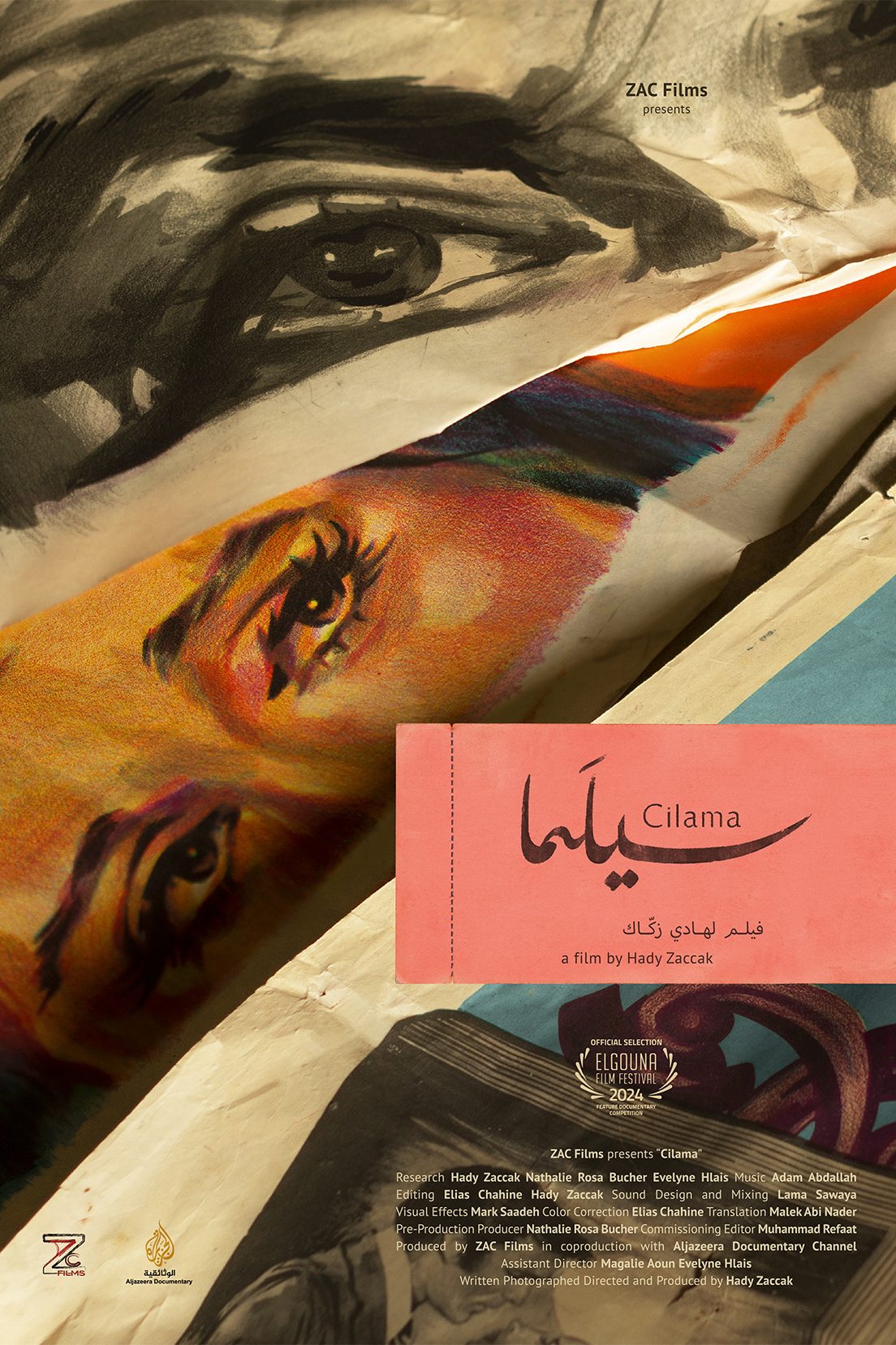
2023, Hady Zaccak, Lebanon / Qatar, 89 minutes, Arabic with English sub. Q&A with film director.
Monday 25 November at 7:00 PM USJ Oriental Library / Leïla Turquie Amphitheater, Tabaris, Ashrafieh, Beirut. (map) Tickets sold at Antoine Ticketing and/or Theater doors. Print Program (PDF)
Film
Trailer
ENG. Cilama is how people referred to Cinema in the popular dialect in Tripoli. It was the beating heart of the city between the thirties and the closing years of the 20th century. The number of cinemas exceeded thirty and were spread throughout the city from Al-Tal Square to the boulevard, the inner neighbourhoods, Bab al Tabbaneh, and all the way to Al-Mina. The cinemas became citizens of the city: Empire, Roxy, Dunia, Opera, Al-Hamra, Rivoli, Palace, Metropole, Le Capitole, Colorado, as well as Lido, Al-Sharq, Al-Qahera, Al-Ahram and Piccadilly, in addition to Al-Alam, Hollywood, Cleopatra, Radio, Salwa, Rabha and Victoria… Through a research spanning several years, the film attempts to reconstruct the biography of Cilama, its temples, rites, and stories of love and wars in a suspended time. One thousand images and forty voices reconstitute the collective memory of an Arab city.
FR. Cilama est ce qu’on appelait le cinéma dans le dialecte populaire tripolitain. Le cinéma occupait une place prépondérante dans la vie des citadins entre les années 1930 et la fin du XXème siècle. Le nombre de cinémas dépassait la trentaine. Ils étaient répartis dans toute la ville, de la place Al-Tal au boulevard, en passant par les quartiers intérieurs, Bab al-Tabbaneh, et jusqu’à Al-Mina. Les cinémas sont devenus des citoyens de la ville : Empire, Roxy, Dunia, Opéra, Al-Hamra, Rivoli, Palace, Métropole, Le Capitole, Colorado, ainsi que Lido, Al-Sharq, Al-Qahira, Al-Ahram et Piccadilly, en plus d’Al- Alam, Hollywood, Cléopâtre, Radio, Salwa, Rabha et Victoria. A travers une recherche étalée sur plusieurs années, le film tente de reconstituer la biographie de Cilama, ses temples, ses rites et ses histoires d’amour et de guerres dans un temps en sursis. Mille images et quarante voix reconstituent la mémoire collective d’une ville arabe.
عُرفت السينما في الأوساط الشعبيّة الطرابلسيّة باسم سيلَما واحتلّت مكانةً مهمّة في حياة عاصمة الشمال في لبنان، امتدّت من الثلاثينيّات إلى نهاية القرن العشرين. تخطّى عدد صالات السينما الثلاثين وانتشرت في جميع أنحاء المدينة من ساحة التلّ إلى البولفار والأحياء الداخليّة وباب التبانة وصولاً إلى الميناء. دخلت الأسماء في نسيج المدينة: أمبير، روكسي، دنيا، أوبرا، الحمراء، ريفولي، بالاس، متروبول، الكابيتول، الكولورادو وكذلك ليدو والشرق والقاهرة والأهرام والبيكاديلي بالإضافة إلى العلَم وهوليوود وكليوباترا وراديو وسلوى ورابحة وفيكتوريا… من خلال بحث يمتدّ على سنوات عدّة، يحاول الفيلم إعادة تكوين السيرة سيلَما ومعابدها وطقوسها وقصص الحب والحروب في زمن معلّق. من خلال ألف صورة وأربعين صوتاً، تتكوّن الذاكرة الجماعيّة لمدينة عربيّة.
Film Director
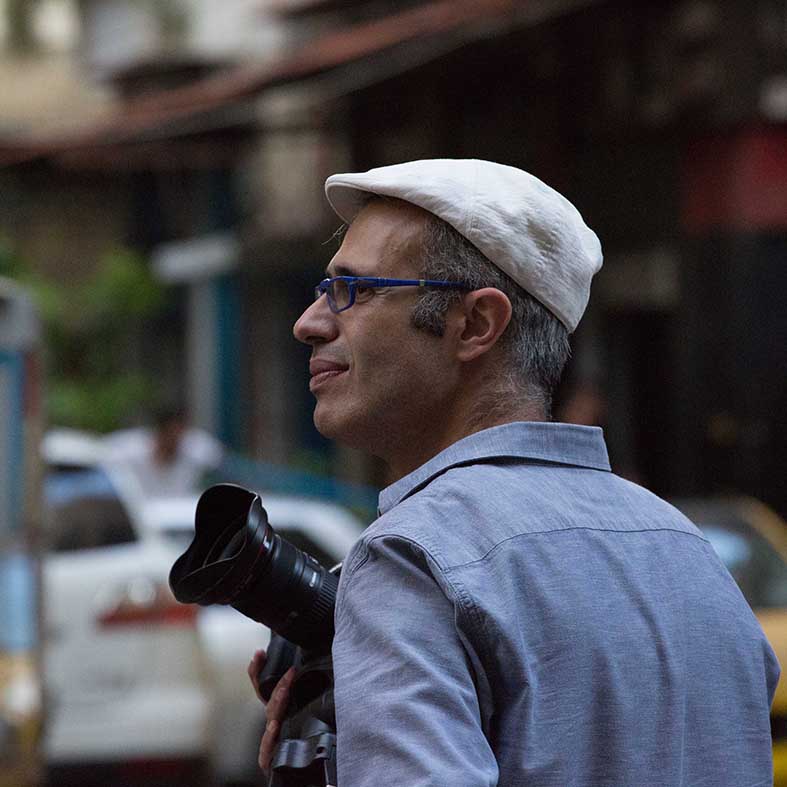
ENG. Hady Zaccak is a Lebanese award-winning filmmaker and a lecturer-researcher at IESAV film School, Saint-Joseph University, Beirut. He is the author of more than 20 socio-political documentaries about Lebanon and the Arab world. His selective filmography includes: Ya Omri (104 wrinkles) (2017) (Jury Award Malmo Arab Film Festival, Sweden, 2017), Kamal Joumblatt, Witness and Martyr (2015) (Francophone Trophy for the best documentary 2016), Marcedes (2011) (FIPRESCI Award (the International Federation of Film Critics)-Dubai International Film Festival 2011), A History Lesson (2009) (1st prize Arab Film Festival-Rotterdam 2010), The War of Peace(2007), Refugees for Life(2006) … In addition to his films, Zaccak is the author of two books on cinema: The Last Film Screening, a Biography of Cilama Tripoli (2021) and Lebanese Cinema, an itinerary of a cinema heading for the unknown (1929-1996) (1997). In 2022, Zaccak presented the exhibition: In this place: Reels of Beirut(2022) at Mina Image Centre in Beirut.
FR. Hady Zaccak est cinéaste libanais et enseignant-chercheur à l’IESAV, Université Saint Joseph- Beyrouth. Il est l’auteur de plus de 20 documentaires primés dans plusieurs festivals arabes et internationaux dont: Ya Omri (104 rides) (2017) (Prix du Jury, Malmo Arab Film Festival, Suède, 2017), Kamal Joumblatt, Témoin et Martyr (2015) (Trophée de la Francophonie pour le Meilleur Documentaire 2016), Marcedes (2011) (Prix International de la Critique FIPRESCI ,Dubai International Film Festival, 2011), Une Leçon d’Histoire (2009) (1er prix, Arab Film Festival, Rotterdam 2010), La Guerre de la Paix (2007), Réfugiés pour la vie(2006)… En plus de ses films, Zaccak est l’auteur de deux livres sur le cinéma : La Dernière Projection, une biographie de Cilama Tripoli (2021) et Le Cinéma Libanais, itinéraire d’un cinéma vers l’inconnu(1929-1996) (1997). En 2022, Zaccak a présenté son exposition In this place : Reels of Beirut (2022) au Mina Image Centre à Beyrouth.
هادي زكّاك مخرج سينمائي لبناني حائز على جوائز عدّة وأستاذ-باحث في معهد السينما IESAV- جامعة القدّيس يوسف- بيروت. أخرج أكثر من 20 فيلماً وثائقياً حول مواضيع سياسيّة واجتماعيّة تتعلّق بلبنان والعالم العربي ومن أبرزها: يا عمري (2017) (جائزة لجنة التحكيم في مهرجان مالمو للفيلم العربي، السويد 2017)، كمال جنبلاط، الشاهد والشهادة (2015) (جائزة الفرنكوفونيّة لأفضل فيلم وثائقي 2016)، مارسيدس (2011) (جائزة إتحاد النقّاد الدوليين في مهرجان دبي السينمائي 2011)، درس في التاريخ (2009) (الجائزة الأولى في مهرجان الفيلم العربي-روتردام،هولندا 2010)، حرب السلام (2007)، لاجئون مدى الحياة (2006) … بالإضافة إلى أفلامه، ألّف زكّاك كتابين عن السينما: العرض الأخير، سيرة سيلَما طرابلس (2021) والسينما اللبنانيّة، مسار سينما نحو المجهول (1929-1996) (1997). قدّم معرض: في هذا المكان: شرائط لوسط بيروت في مركز مينا للصورة في بيروت في العام 2022.
with the generous support of 👇
&
The exhibition Cinema Tripoli. Archaeology of a Collective Memory, original photographs by Hady Zaccak is held till 6 December at the Library Grand Gallery.


 &
& 
 Beirut Art Film Festival